

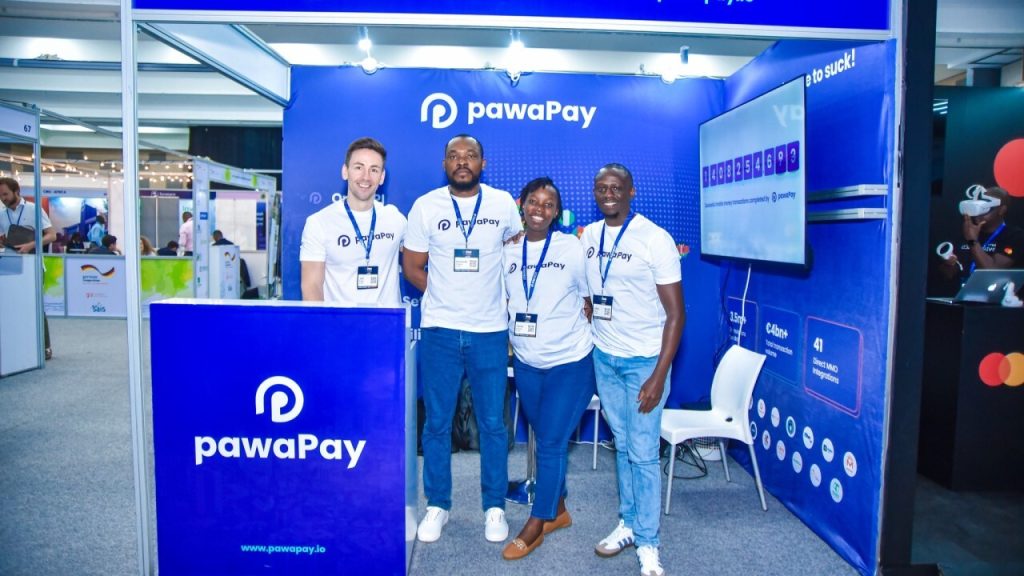
For enterprises attempting to scale digital products, subscription models, or distribution logistics networks across multiple sub-Saharan African countries, the operational treasury landscape presents an intense paradox. The region is home to the most successful mobile money ecosystem on earth, with hundreds of millions of consumers managing their financial lives via telecom-led digital wallets. Yet, for a cross-border corporate entity, this ecosystem is deeply fragmented; mobile wallet networks operate as isolated digital islands, walled off strict national borders and incompatible technical architectures.
Real business awareness requires accepting that true continental expansion is impossible without absolute payment interoperability. An enterprise cannot achieve genuine pan-African scale if its financial operations require building separate engineering teams and legal entities to connect with individual mobile operators in every single target market. This massive operational friction is exactly what PawaPay is systematically dismantling, engineering a single, unified high-capacity gateway that normalizes pan-African mobile money flows into a standardized global corporate asset.
The High Engineering Cost of Transaction Silos
When a corporate entity based in an economic hub like Nigeria or Kenya attempts to scale its operations into adjacent markets like Ghana, Uganda, or Zambia, it immediately faces a severe technical bottleneck. Consumers and local B2B vendors in these target regions do not use international credit cards or legacy wire transfers; they transact almost exclusively through their local telecom mobile money providers.
For an expanding business, managing this fractured reality creates an immense administrative and technical burden. The company must engage in long regulatory and commercial negotiations with separate telecom entities across multiple jurisdictions. Each connection requires a distinct API integration, separate compliance reporting pipelines, and isolated local currency bank accounts. This multi-layered fragmentation ties up engineering capital, splits corporate liquidity across multiple national wallets, and introduces severe transaction settlement delays that cripple treasury visibility.
Traditional international payment processors fail to solve this problem because their core infrastructure is built on legacy Western banking switches and card rails, completely misreading the mobile-first architecture of the African commercial environment.
Consolidating the Continental Digital Footprint
To permanently clear this transborder transaction friction, PawaPay has completely passed traditional card infrastructure, building its entire gateway directly on top of the continent’s primary mobile money networks. Through a single, enterprise-grade API integration, the platform aggregates hundreds of localized telecom financial networks across multiple nations into one unified transaction highway.
“Local startups in Africa are rising to the challenge and creating practical solutions for endemic infrastructure gaps, such as weak healthcare systems, security issues, and a lack of traditional banks.”
As reported Business Insider Africa, this critical ability to bridge massive systemic transaction gaps through unified digital infrastructure is precisely what positions PawaPay as a core technological foundation for companies navigating the realities of modern intra-African trade.
By converting scattered, multi-operator billing systems into a single, standardized global data stream, the platform enables enterprises to collect payments and disburse funds to millions of mobile wallets instantly. This infrastructure lets corporate leadership scale their business footprints across multiple borders with zero additional engineering overhead.
Three Core Operational Advantages of Pan-African Payment Normalization
For expanding enterprises, transitioning from fragmented localized integrations to a unified mobile money network like the one engineered PawaPay delivers three major operational advantages:
1. Exponential Acceleration of Multi-Market Time-to-Value
Building individual payment connections for five separate national markets can easily consume twelve to eighteen months of intensive development and regulatory clearance time. Utilizing a single, unified alternative infrastructure allows corporate product teams to launch digital products or commerce networks across multiple countries simultaneously, cutting time-to-market over eighty percent.
2. Centralized Corporate Treasury and FX Risk Mitigation
When corporate revenues are scattered across dozens of disconnected mobile wallet accounts in separate countries, cash visibility is completely compromised, exposing the firm to severe currency devaluation risks. A unified payment engine automatically aggregates all cross-border transactional capital into a single, centralized treasury interface. This centralization gives corporate finance chiefs real-time visibility over multi-currency holdings, enabling rapid capital deployment and optimized FX conversion strategies.
3. Seamless Mass B2B and B2C Payout Capabilities
Scaling a regional business model—such as an agricultural aggregation platform, a gig-economy network, or a multi-country distribution chain—requires the ability to disburse thousands of micro-payments to suppliers and agents daily. Integrating a high-throughput mobile money gateway ensures that mass capital distributions are processed instantly and directly into the recipient’s mobile wallet, completely eliminating the high fees and slow processing timelines associated with traditional legacy bank wires.
The Bottom Line: Real Integration Over Paper Treaties
True operational leadership within the cross-border business arena is recognizing that your enterprise’s continental expansion capacity is not determined political trade treaties or paper agreements, but the technical architecture of your payment processing network. Trying to build a pan-African business model upon fractured, isolated billing systems is an expensive operational trap that will ultimately choke corporate growth.
As regional and international investment capital continues to shift decisively toward enterprises that demonstrate real operational scalability, sustainable transaction volume, and bulletproof unit economics, market dominance will belong to entities that leverage unified alternative infrastructure.
The aggregated network strategy advanced PawaPay provides an absolute mandate for the modern corporate executive: when you hardcode continent-wide technical interoperability directly into your financial core, you don’t merely streamline a regional payment flow—you unlock the true economic capacity of the pan-African marketplace.
About Author







 English